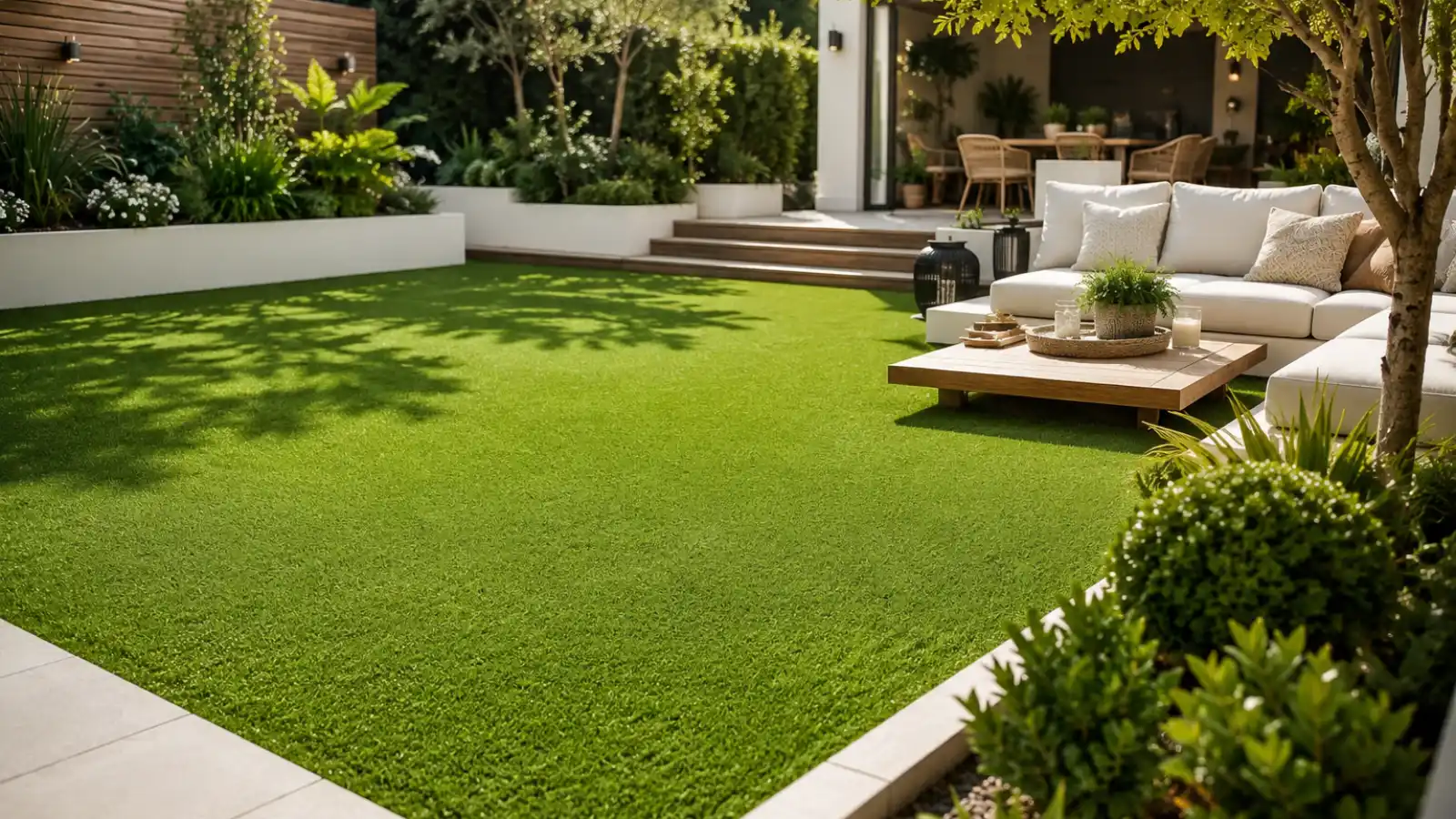
Artificial grass is low-maintenance, not no-maintenance. A few minutes with a stiff brush and a hose keeps it looking right — and if you have a dog, a little routine keeps it smelling right too.
People choose artificial grass because they are tired of mowing, and then wonder whether they have swapped one chore for another. They have not. Looking after it takes a fraction of the effort of a real lawn, but it is not zero, and the few jobs it does need are worth doing before a problem has the chance to build up.
The routine that does most of the work
Most of what lands on an artificial lawn is leaves, twigs, dust and the odd bit of mud. None of it does harm if it is dealt with regularly, and all of it becomes a nuisance if it is left to sit and rot into the base.
- Remove loose leaves and debris with a leaf blower or a soft-tined rake. A stiff garden rake can drag the fibres, so go gently.
- Brush the pile upright with a stiff-bristled broom every few weeks, working against the lean of the grass. It lifts flattened areas and stops the surface looking tired where people walk most.
- Rinse with a garden hose now and then to wash off dust and pollen. Rain does some of this for you, but sheltered patches under a fence or a table do not get it.
- Deal with spills as they happen. Most food and drink wipes up with a cloth and a little warm water.
Muddy paws, moss and weeds
Mud dries and brushes off. Wipe up what you can while it is damp, then leave the rest to dry and brush it away. It is the one case where waiting a little makes the job easier.
Moss and algae need damp and shade, so they turn up at the edges and under trees or fences where the lawn stays wet. A stiff brush and a mild cleaner made for artificial turf will shift a light covering. If it keeps coming back, the cause is usually water that is not draining away, and that is worth looking at rather than scrubbing.
A few weeds can still push through at the edges or along the seams, because seeds blow in and settle in soil and debris rather than in the grass itself. Pull them out by hand while they are small. Strong weedkillers are rarely needed, and it is worth checking a product is safe for the backing before using it.
Keeping it fresh with a dog
Dogs are one of the main reasons people choose artificial grass: there is no mud, no brown patches, and it can be rinsed. The thing to get right is waste, because it will not be broken down by soil the way it is on a natural lawn.
- Pick up solid waste promptly and bin it.
- Hose the area down straight afterwards so nothing is left on the fibres or the base.
- Wash the area more thoroughly once a week or so with a bucket of water and a pet-safe cleaner. Check the label says it is safe for animals before using it.
- If one spot is used again and again, give that spot extra attention. Staying on top of a small area is easier than treating the whole lawn.
What to avoid
- Hot items. Barbecue coals, fire pits, hot ash and even a dropped cigarette can melt the fibres. Keep a barbecue on a paved or protected area.
- Harsh chemicals and bleach. They can discolour the grass and harm the backing.
- Sharp tools. Digging forks and metal rakes catch the fibres, so use soft-tined brushes instead.
- Close-range pressure washing. A pressure washer held right up against the surface can lift the infill and loosen seams. If you use one at all, keep it on a low setting and at a distance.
- Heavy, sharp-legged furniture dragged across it. Lift it instead.
A simple yearly check
Once or twice a year, walk the lawn and look at the edges and seams. Check that they are still firmly fixed down, that no corners have lifted and that water is draining properly. Small problems at the edge are cheap to put right and expensive to ignore.