They look almost identical on a showroom stand and there's often a real gap in price. In a kitchen, though, the two behave very differently — and it comes down to what happens when water gets in.
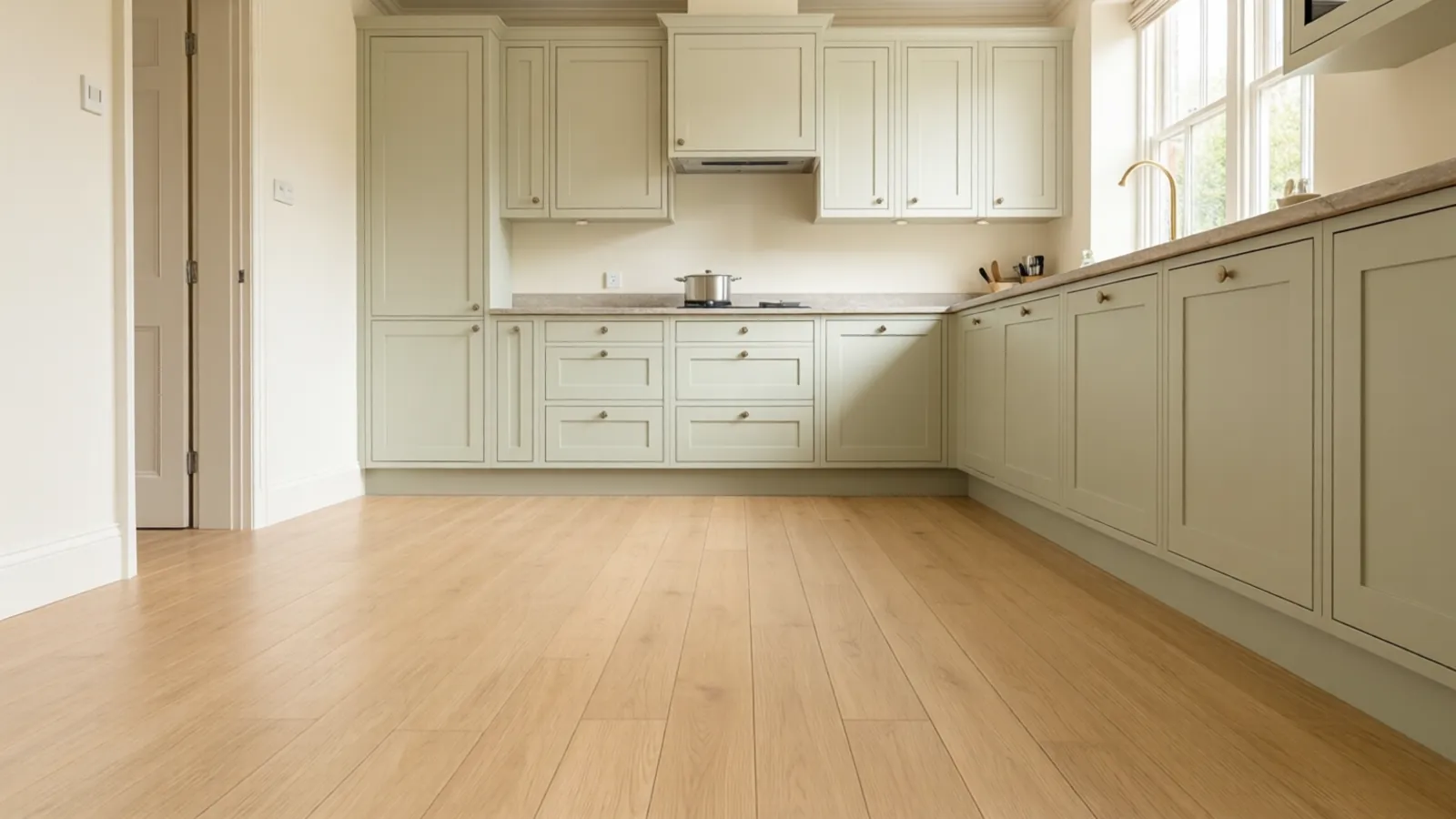
Stand two samples side by side on a display and most people can't tell which is which. Modern laminate and modern LVT both do a convincing job of looking like real wood, and both click together over an underlay. The honest difference only shows up months later, and in a kitchen it usually shows up around the dishwasher.
What they actually are
Laminate is a wood-based product. Underneath the printed decorative layer is a core of high-density fibreboard — compressed wood fibre. It's dense and hard, but it is still wood, and wood swells when it absorbs water.
LVT — luxury vinyl tile — has no wood in it. The printed layer sits on a vinyl core with a clear wear layer on top. Water simply doesn't do anything to it. That single distinction drives almost every practical difference between the two.
Water: the deciding factor in a kitchen
A wiped-up spill is not a problem for either floor. Good laminate has a sealed surface and will shrug off a splash quite happily. The issue is water that gets past the surface and sits — a slow leak behind the washing machine, a dishwasher seal that's started to weep, condensation running down the back of a unit.
When water reaches the fibreboard core, it swells. Once a laminate board has swollen at the edges it does not go back down; you can see it and feel it, and the only fix is replacing boards. LVT in the same situation gets wet and then gets dry.
How they compare, point by point
| LVT | Laminate | |
|---|---|---|
| Core material | Vinyl — unaffected by water | Fibreboard — swells if soaked |
| Standing water | Handles it | Damages the board edges |
| Underfoot feel | Softer, slightly warmer | Harder, cooler |
| Sound | Quieter, duller step | Louder, more hollow |
| Scratch resistance | Very good with a thick wear layer | Excellent — a hard surface |
| Dents from heavy items | Can mark under point loads | Resists dents well |
| Subfloor preparation | Needs a flat, smooth base | More forgiving |
| Underfloor heating | Generally suitable | Depends on the range |
| Typical cost | Higher | Lower |
Comfort and noise
A kitchen is a room you stand in. LVT is a little softer and a little warmer underfoot, which you notice while you're washing up or waiting for the kettle. It's a small thing, but it's the kind of detail that gets noticed a few months after a kitchen is finished.
LVT is also noticeably quieter. Laminate has a slightly hollow, sharper sound when you walk on it — it's the nature of a hard board floating over an underlay. If your kitchen is open plan, or there's a bedroom directly beneath, it's worth factoring in.
Where laminate still wins
It would be easy to read all that and conclude laminate has no place in a kitchen. That isn't right, and the correct floor matters more than the dearer one.
- It's harder. Laminate copes better with dropped pans and heavy furniture legs than a soft-backed vinyl does.
- It's more forgiving of an imperfect subfloor. LVT is thinner and telegraphs bumps and dips underneath it, so an uneven floor may need levelling first — which adds cost.
- It's cheaper. If the budget is tight and your appliances are freestanding and easy to see behind, laminate does a genuinely good job.
- It's easier to replace in a small area if you damage a board.
Don't skip the subfloor
This is the part of the quote people query most and it's the part I'd least like to cut. Both floors are laid over what's already there, so whatever is underneath dictates the finish on top. LVT in particular is unforgiving — a dip you can barely see in bare floorboards will be visible once a thin vinyl plank is over it, and you'll see it every day in the light from the kitchen window.
If we quote for levelling compound or a plywood overlay, it's because the floor needs it. It's far cheaper to do it once at the start than to lift a finished kitchen floor.
What about vinyl sheet?
Worth mentioning, because it's often the right answer and it gets overlooked. Sheet vinyl comes in one continuous piece, so in a small or awkward kitchen there are almost no joins for water to find at all. It's also the cheapest of the three. If you want maximum water protection on a modest budget, take a look at our vinyl range before you rule it out.
The short version
For most kitchens with built-in appliances, LVT is worth the extra. For a kitchen on a budget where everything is freestanding and visible, laminate is a perfectly sensible floor. For a small kitchen where water is the main worry, sheet vinyl is hard to beat.
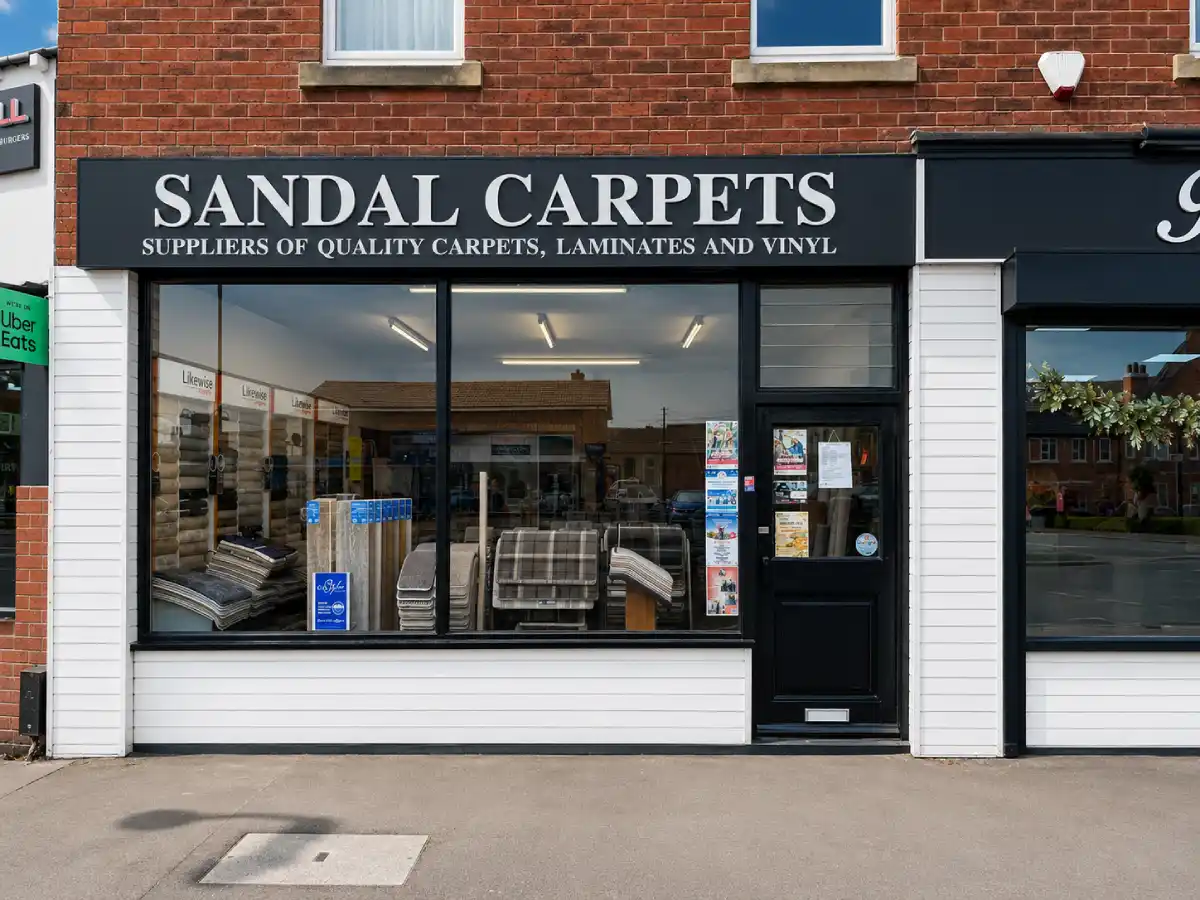
Bring the dimensions of your kitchen into the showroom and we'll price all three so you can see the actual gap. It's usually smaller than people expect once fitting is included.