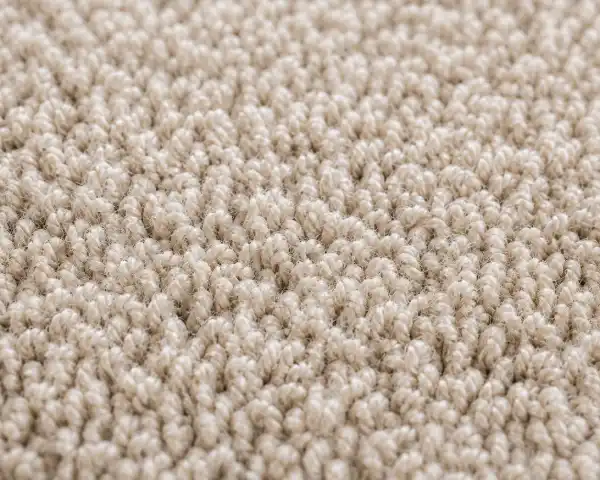
A low price per square metre isn't the same as good value. Here is what to check on a budget carpet, where you can safely save, and where cutting corners costs more later.
Nobody wants to spend more on carpet than they have to, and there is nothing wrong with a tight budget. The trouble with a very cheap carpet is rarely the price on the day. It is the price per year, once the stairs have flattened or the lounge has gone shiny in the places everyone walks. Spending less and spending badly are different things, and the difference is mostly down to knowing what to ask.
This is what we would check before buying any carpet where cost matters, and where a careful shopper can safely save money and where they can't.
Why the cheapest roll is not always the cheapest carpet
Carpet is sold by the square metre, so the label price looks easy to compare. It isn't, because two carpets at the same price can be built very differently. What you are paying for is the amount of yarn packed into each square metre, the fibre that yarn is made from, and the backing that holds it. A thin, sparse carpet is cheaper to make and it wears out sooner, and in a busy room it can need replacing in a fraction of the time.
So the useful question is not what a carpet costs, but what it costs for each year it lasts in that particular room.
Match the carpet to the room, not to the budget
The biggest saving most households can make is also the simplest. Not every room needs the same carpet.
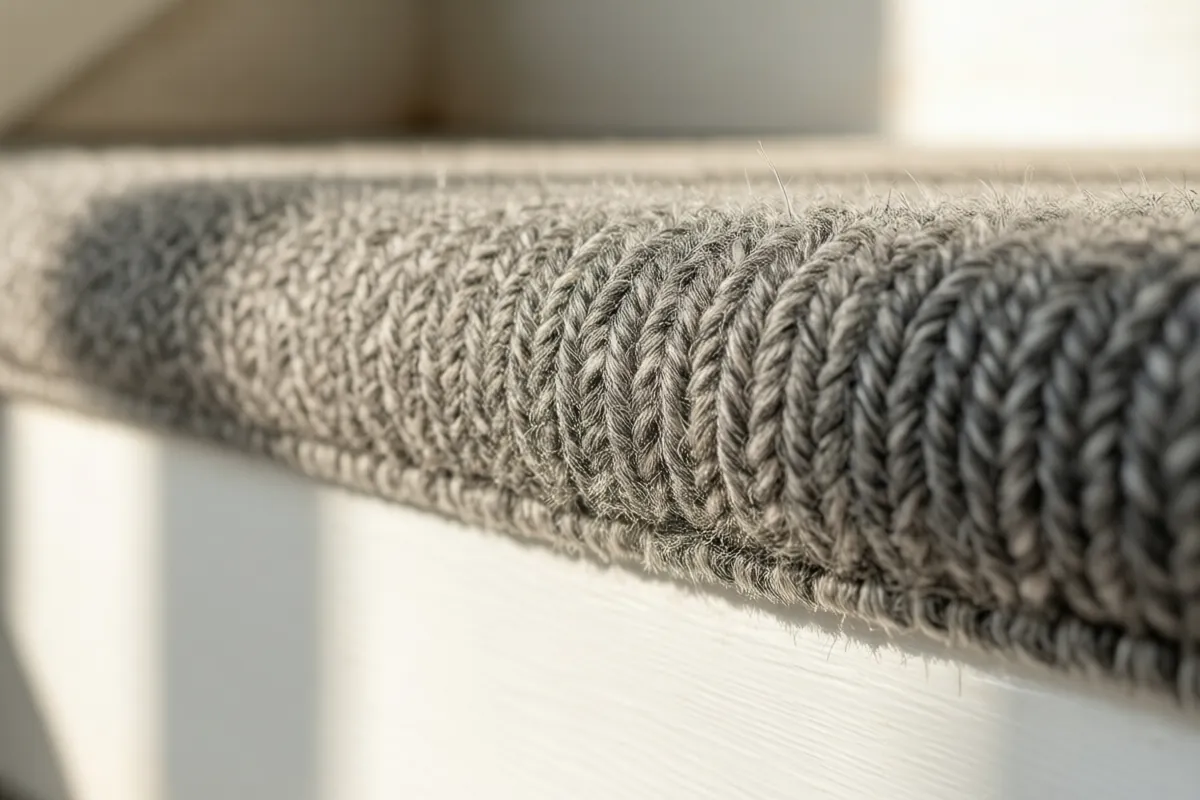
- Hall, stairs and landing take the hardest wear. Put your money here first. Our guide to choosing a stair carpet covers why.
- Living rooms and children's rooms come next. Spills, toys and constant foot traffic make them a poor place to economise.
- Spare bedrooms and rarely used rooms can take a lighter-duty carpet. Little walks across them, so a more modest grade will look the same for years.
- Master bedrooms sit in between. Footfall is low but you feel the carpet underfoot every morning, so softness is worth paying for.
Spending a little more in two rooms and a little less in two others usually beats a mid-priced carpet everywhere.
What to ask about any carpet
- What is the fibre? Wool and wool-mix carpets (a common blend is 80% wool and 20% nylon) are resilient and usually cost more. Nylon is hard-wearing. Polypropylene is a common budget fibre and is naturally resistant to stains, though it can flatten sooner in a busy area. Polyester feels soft but tends to mat in heavy traffic.
- How dense is the pile? Press your thumb into the sample. If you can easily feel the backing through it, the yarn is sparse and will crush faster. A dense, short pile almost always outlasts a loose, long one at the same price.
- What is it rated for? Ask which use class the carpet is made for, such as general domestic or heavy domestic. A carpet rated for a bedroom is not designed for a hallway.
- What is the backing? A firm, well-made backing keeps the carpet stable when it is stretched and fitted. Ask to see the back of the sample as well as the front.
- What does the guarantee actually cover? A long guarantee on paper is only useful if you know what counts as wear and what doesn't.
Where you can save safely
There are real savings that cost you nothing in durability, and they are worth taking.
- Choose a plain or flecked carpet over a patterned one. A pattern has to line up across every join, so it wastes more material and it takes longer to fit.
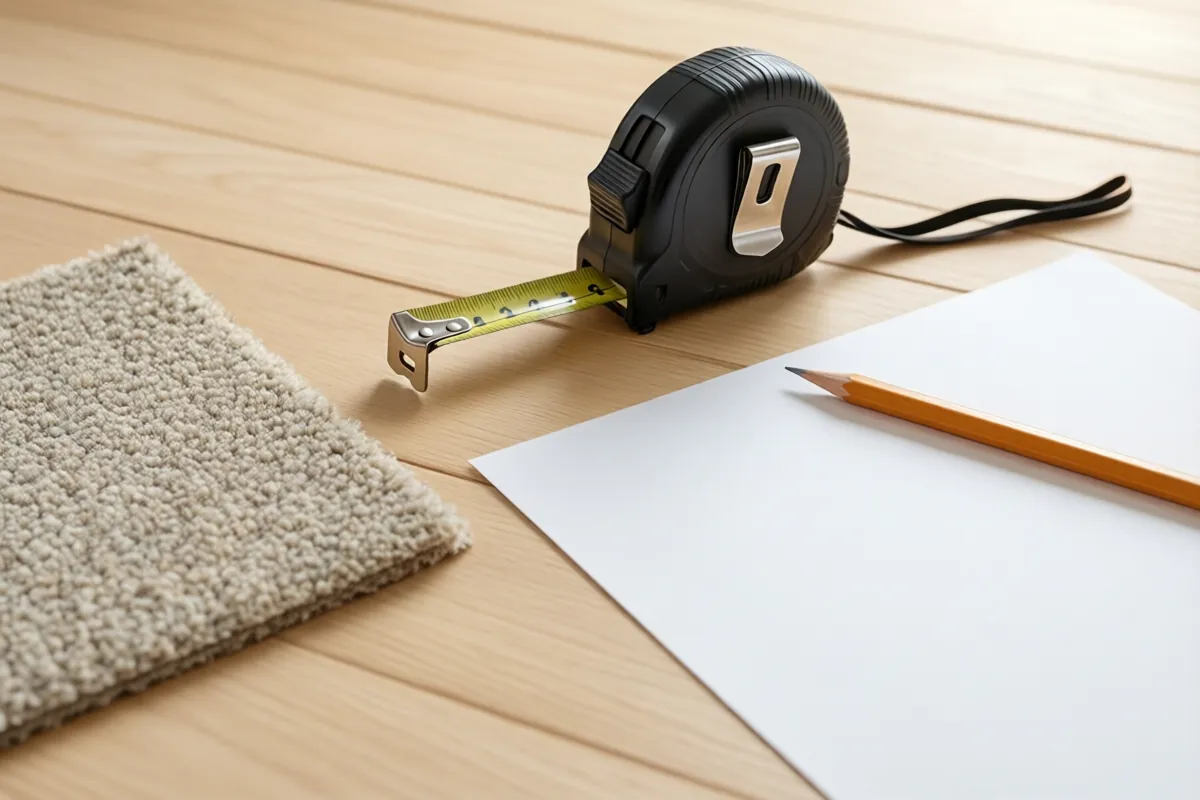
- Know your widest measurement. Carpet comes off a 4 metre or 5 metre roll, so a room that is just over 4 metres wide can cost noticeably more than one that is just under. Our guide to measuring a room explains how roll widths affect the price.
- Pick a mid-tone. Very pale carpet shows marks and very dark carpet shows fluff, so a mid-tone with a fleck makes a cheaper carpet look better for longer.
- Consider one carpet through the hall, stairs and landing. It simplifies the job and usually looks better than three separate carpets.
Where you shouldn't save
Underlay is the part people are most tempted to cut, and the part most likely to cost them. It sits out of sight, but it cushions the carpet, absorbs the wear and protects the backing. A good carpet on poor underlay wears like a poor carpet. If you have to choose, put the money into the underlay and the fitting rather than into a fancier surface.
Fitting is the other one. Poor fitting causes rippling, lifting and open seams, and none of that is cured by a better carpet. A carpet that is stretched and fixed properly looks better and lasts longer than the same carpet laid in a hurry.
Look at the whole quote, not the carpet price
Offers that lead with a very low carpet price or with free fitting are worth reading carefully. The question to ask is not whether the headline is true, but what is left out of it. A fair comparison puts the same things side by side.
- The carpet itself, including how much of the roll you are paying for
- Underlay, and whether it is included or extra
- Fitting, including stairs, doorways and any awkward shapes
- Trims and door bars
- Taking up and disposing of the old carpet
- Moving furniture
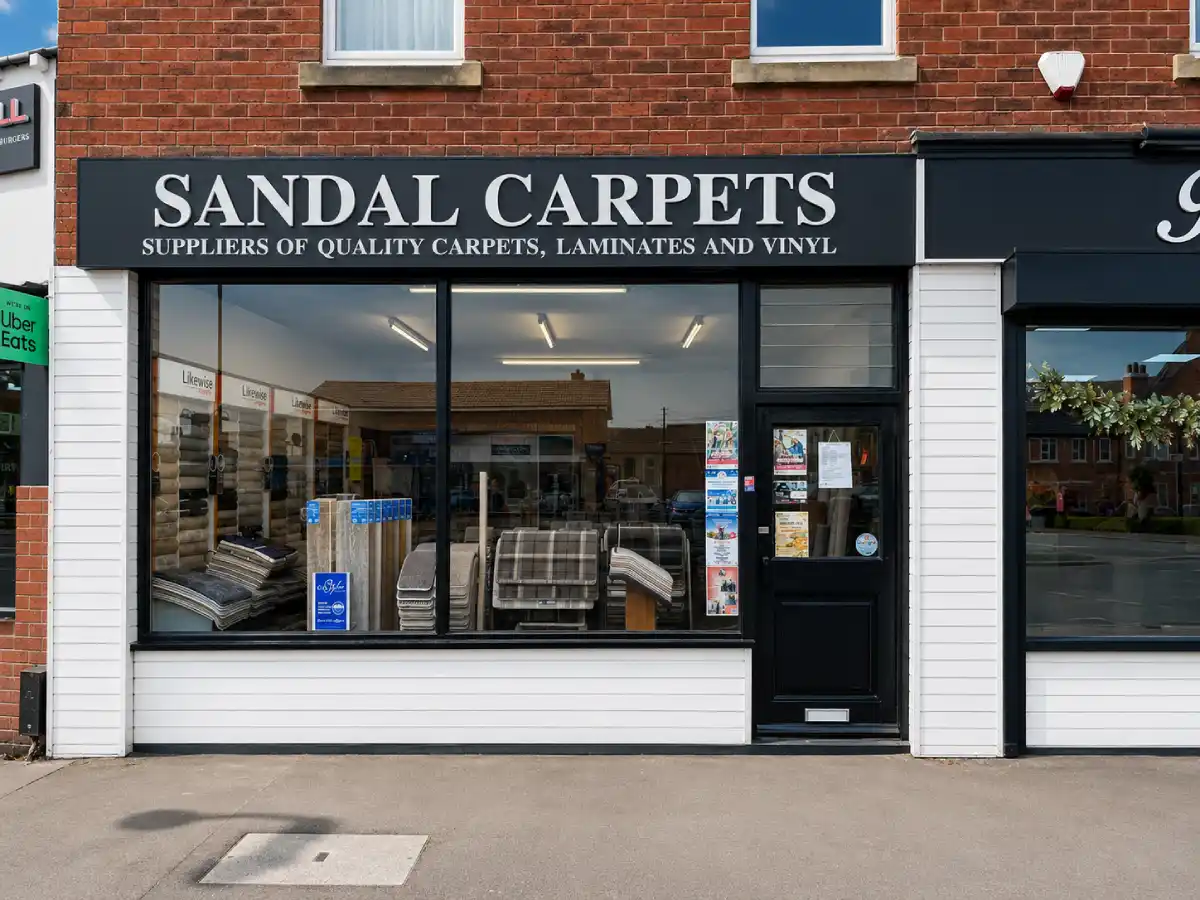
Get each quote in writing and in the same shape, and the real difference between them becomes easy to see. At Sandal Carpets we measure free of charge and give one written quote covering the flooring, the underlay or preparation, the trims and the fitting, so there is nothing to discover on the day.
A word on our 30% off carpets
We advertise 30% off carpets. It is a standing offer rather than a seasonal one, and you claim it by visiting the showroom. Bring the room measurements and ask about the carpet you have in mind.
Come and compare in person
Looking at pictures online tells you very little about density, softness or backing. Look at the samples in daylight, turn them over to see the backing, and press your thumb into each one. If you tell us the room, who uses it and roughly what you want to spend, we will tell you honestly whether a carpet is right for it.
Related pages
- Carpets supplied and fitted in Wakefield — the ranges you can see in the showroom
- Carpet and flooring fitting — what is included and how we arrange it
- How to choose a stair carpet — where to put the money first
- How to measure a room for flooring — roll widths and why they change the price